The Role of the Lynx in the Ecosystem
The lynx plays an important role in the ecosystem as an apex predator. By controlling populations of hoofed animals such as roe deer and chamois, it prevents these herbivores from becoming overabundant. This is crucial, because excessively high numbers of roe deer and chamois can lead to heavy browsing on young trees and shrubs, which significantly hinders forest regeneration. By regulating these populations, the lynx helps maintain a healthy balance between wildlife and vegetation.
In addition, the lynx influences the behavior of its prey: in areas where lynx are present, roe deer and chamois change their movement patterns, avoid open areas, and generally become more cautious. This altered behavior leads to a more natural distribution of herbivores, allowing vegetation to recover and develop in diverse ways. Thus, the lynx supports the sustainable regeneration and stability of forest ecosystems not only directly through predation but also indirectly by triggering behavioral changes in its prey.
Genetic Erosion – A Growing Threat
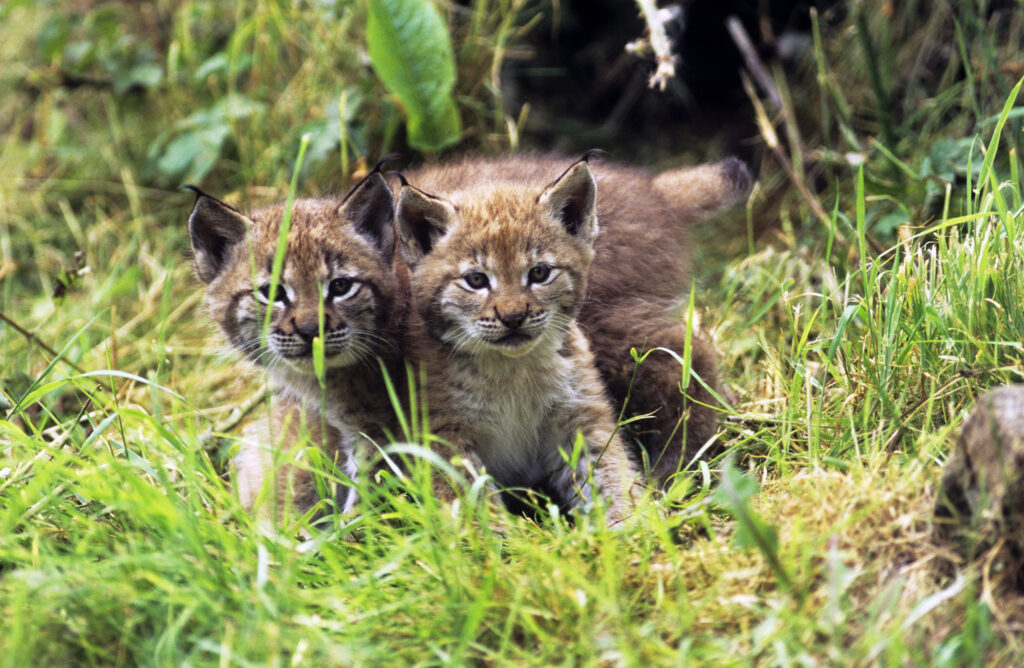
The greatest threats to lynx in Switzerland are illegal killings, vehicle collisions, and habitat fragmentation. Added to this is the creeping danger of genetic impoverishment, associated with the risk of negative effects from inbreeding. This stems from the small number of individuals released during reintroduction as well as the lack of connectivity between Swiss lynx populations and those in neighboring regions.
Given their current size, genetic makeup, and overall situation, the long-term survival of the Swiss lynx population is not guaranteed. Severe habitat fragmentation requires us to consider and manage large mammals as metapopulations. A metapopulation is a population split into several subpopulations, where gene flow—meaning the exchange of individuals—is possible but more or less restricted. In the case of the lynx in Western and Central Europe, dispersal movements observed in subadult animals suggest that sufficient natural gene flow could eventually develop between these subpopulations. The prerequisite, of course, is that designated habitats—such as well-forested low mountain ranges—host subpopulations that are demographically and genetically viable. This is currently not the case: some key stepping-stone habitats are still unoccupied, and the oldest reintroduced populations urgently require genetic reinforcement.
Switzerland’s Responsibility
Switzerland plays a crucial role in the survival and protection of the lynx in Europe. It is a central part of the network of lynx populations that extends across several partially isolated regions (a metapopulation). Lynx live in multiple areas separated from one another. In a functional metapopulation, these areas must be connected through dispersal and the exchange of individuals, helping the species remain healthy and capable of reproduction—but this large-scale connectivity is currently lacking for the lynx.
Geographically, Switzerland is located at a key junction between lynx populations in the Alps, the Jura, and other parts of Europe where the species is less widespread. From Switzerland, lynx can disperse into other regions, enabling genetic exchange and supporting the long-term survival of the species. Historically, Switzerland was one of the first countries to successfully reintroduce the lynx, and since then a great deal of knowledge and practical experience has been gained about these fascinating animals. By connecting habitats within Switzerland and beyond, the country can therefore make a significant contribution to the lynx’s survival in Europe.
Switzerland’s Responsibility
Want to learn more about the lynx? Here you’ll find fascinating and up-to-date information: